Ethical Streaming: Navigating the Moral Landscape of Digital Music Consumption
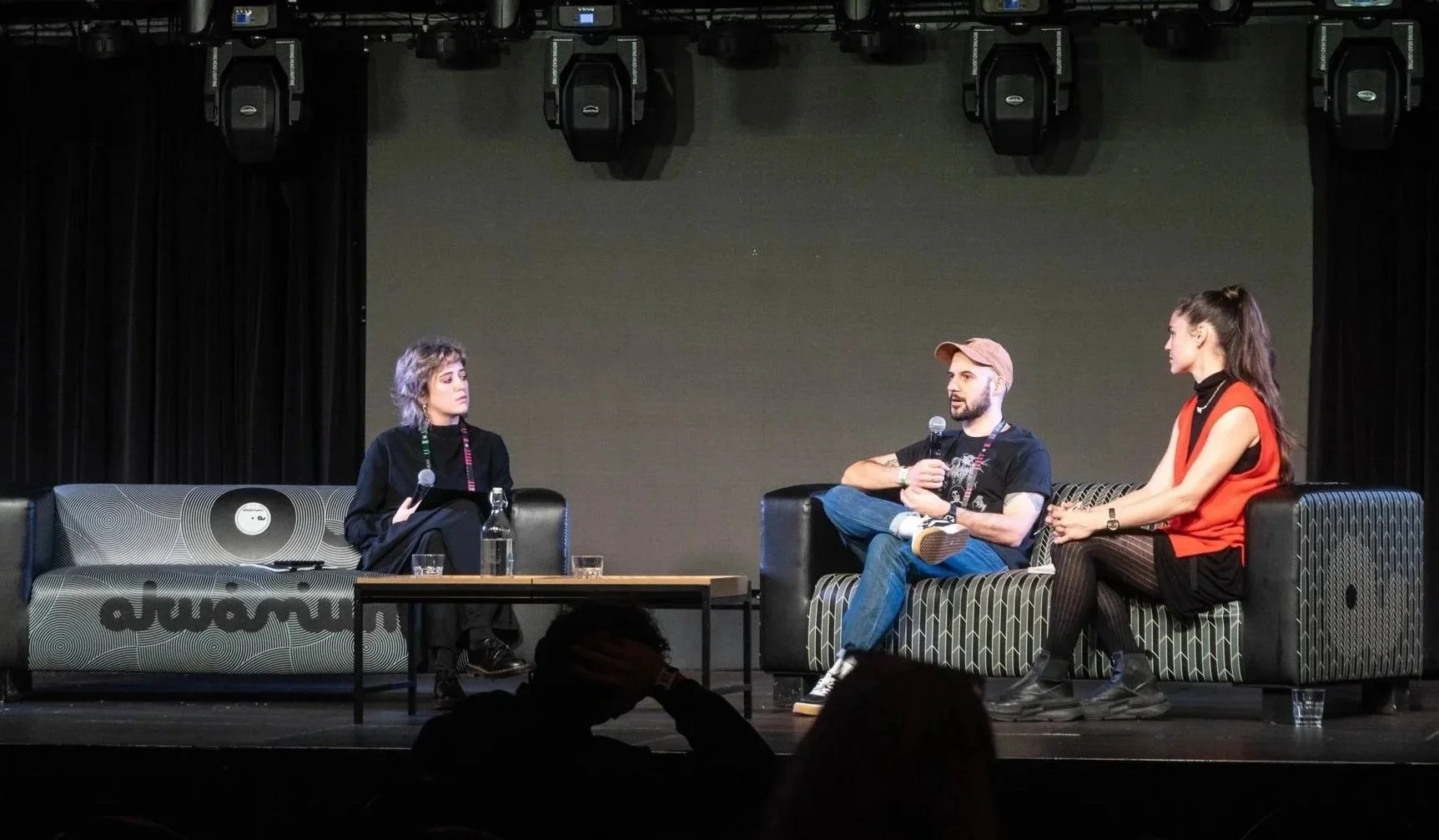
Photo by: Kristóf Kenyeres
Fiona Ham was invited to speak on the panel Streaming Alternatives at the Bush Festival (Budapest Showcase Hub), a club festival and conference showcasing emerging Central and Eastern European artists, hosted by Lahmacun Radio. Lahmacun Radio is a Budapest-based online community radio station founded in 2018 with a mission to provide a platform for diverse musical and cultural movements. Operating as a non-profit, listener-supported platform run largely by volunteers and part of the Independent Community Radio Network (ICRN), Lahmacun features local and international hosts. It aims to showcase the city’s vibrant subcultures and musical scenes while fostering cultural exchange and supporting independent music.
The panel explored the social and economic implications of streaming services and highlighted alternative models. Ongoing debates, particularly ethical concerns linked to investments in controversial industries, draw attention to the personal responsibility and moral context of media consumption. Discussions also addressed ethical issues related to major streaming platforms, the past, present, and potential future directions of the streaming industry, as well as the role of “counter-platforms” and online radio in strengthening the independent music and cultural scene. This vital discussion was hosted by Lahmacun Radio.
Historical Context of Music Distribution and Streaming
Since the advent of the gramophone in 1887, music consumption has continually evolved from the golden era of broadcast radio to today’s digital streaming landscape. Broadcast radio was historically the first mass medium for music, characterized by curated programming created by knowledgeable local DJs and presenters who shaped community identity. In contrast, streaming offers on-demand access, where users select music anytime, but often within algorithmically generated playlists. This shift from continuous broadcast to streaming has transformed how music is discovered, heard, and valued.
Defining Streaming versus Broadcasting: Models and User Engagement
Broadcasting transmits a continuous stream of curated content to a broad audience simultaneously, such as traditional FM/AM radio. Streaming delivers audio content on demand over the internet, allowing users to select specific songs, albums, or playlists anytime they want.
Streaming models can be separated into:
On-demand streaming: Users actively select tracks or playlists, fostering active listening and engagement.
User-generated content (UGC) streaming: Platforms hosting content uploaded by users, often with less transparent licensing and monetization.
Algorithmic or passive streaming: Curated playlists or radio-like streams generated algorithmically, leading to varying degrees of conscious engagement.
This distinction is crucial since ethical considerations, such as fair remuneration and licensing transparency, hinge on active versus passive consumption patterns.
The Role of Digital Streaming Platforms: Distribution, Marketing, and Career Advancement
Digital streaming platforms (DSPs) serve as powerful catalysts in advancing creators’ careers, far beyond merely distributing music. These platforms operate at the intersection of media, technology, and social interaction, shaping what music gets pushed forward and who gains visibility in an ever-expanding digital universe. The digitally mediated music environment presents an overwhelming volume of choices, and estimates suggest that the average listener spends approximately two hours and forty minutes a day actively listening, amidst millions of available tracks, raising critical questions about how “deserving” music is identified and promoted.
Traditionally, radio hosts, presenters, or DJs curated music based on their expertise and understanding of artists’ trajectories and audiences, applying a human sensibility to the process of career fostering. Digital platforms attempt to replicate this role algorithmically, but the criteria they use to promote artists are less transparent, prompting ethical concerns around whose voices are amplified and why. The remuneration structures, often offering only fractions of a cent per stream, and the opacity of licensing agreements, further complicate the ecosystem. These complexities urge us to examine digital platforms not only as media conduits but as marketing engines vested with immense power in shaping cultural landscapes and career success.
Broad Ethical Considerations in Streaming Platforms
Recent ethical debates have centred around investments made by major streaming services in industries with moral controversies, raising questions about the responsibility of both platforms and listeners. However, ethical responsibility does not rest solely on users. While listeners can choose platforms, structural power dynamics, opaque licensing deals, and uneven revenue distribution play larger roles in shaping the ecosystem.
The Role of Local and Community Radio
In contrast to global digital streaming services, community and local radio continue to advocate for programming that reflects regional and cultural needs. For example, Canada currently lacks a 100% dedicated electronic music FM radio station, which contrasts sharply with countries like Germany, France, and the UK, where electronic music stations serve as cultural hubs for local artists.
A key reason local and especially terrestrial FM radios are vital is due to the tariffs and royalty structures in place. When a song is played on FM radio, the station pays licensing fees according to tariffs certified by the Canadian Copyright Board. These tariffs generate significant royalties for creators, far surpassing what creators typically earn per stream on digital platforms. While exact per-song royalty amounts vary by market and listenership, collectively, radio royalties represent an essential and considerable income.
It's important to distinguish between community radio, national FM radio, and digital streaming radios, as each operates under different tariff systems:
Community radio: Usually non-commercial with lower tariff and licensing fees. These stations are predominantly volunteer-run, with an ethos focused on community engagement and local culture, rather than high royalty payouts. The community aspect carries intrinsic value, fostering social cohesion and local representation.
National FM radio: Operates with higher tariffs and royalty pools, offering more substantial payments to artists, often with broader audiences.
Digital streaming radio: Though royalty payments and revenue distribution are less transparent, digital community radios differ structurally from commercial digital platforms. Most rely on volunteers and prioritize community building over profits or high tariffs, which offers a distinct value beyond monetary compensation.
This illustrates why supporting a dedicated Canadian electronic music FM radio station is critical, offering both cultural resonance and fair financial remuneration to creators. Moreover, terrestrial radio play provides recognition that supports artistic careers in ways distinct from digital streaming.
Royalties and the Canadian Context: A Call to Action
Statistics reveal that only about 7% of Canadian content is consumed on streaming platforms in Canada. This implies that roughly 93% of royalties generated through streaming leave Canada, representing significant cultural and economic leakage. Conversely, traditional FM radio supports approximately 35% Canadian content, offering a more sustainable model for Canadian electronic music creators. This gap underscores the urgent need for a dedicated 100% Canadian electronic music FM radio station, an institution to support local talent and keep remuneration within the country. Efforts to gather comprehensive data on Canadian content (CanCon) through systems like the MAPL (Music, Artist, Performance, Lyric) designation can serve as a blueprint for other territories aiming to preserve and promote the discoverability of local musical content. This is precisely why HAUSOFHAM and NOCTIL are collaborating to address the significant gap in identifying CanCon electronic music by effectively matching recording data to the underlying composition or providing an automated workflow to register active and unregistered catalog while marking content accordingly within the MAPL system.
A major challenge observed in Canadian and other electronic music territories is that many creators and artists often do not have their works registered because of the scarcity of electronic music outlets, resulting in little financial incentive to do so. Furthermore, many of these artists operate in underground or non-traditional models outside the conventional independent music infrastructure, meaning they often lack access to formal publishing channels or registration systems.